Friday, 26 April 2013

Week 8 - Religion In The Forest

This week, the class was lucky enough to spend half the lecture among the trees by The Lakes at UQ. Stepping outside the classroom was refreshing and enjoyable. It allowed time to escape the busyness of university life which is usually bogged down with assignments and endless amounts of time spent indoors. 

The results of the time spent by the lake is summarised in this poem I wrote: 

The light warms my skin and dances on my eyelids

The trees absorb and provide me with the air I breath
From the dead and decomposed I sit on.


The lake thrives as a metropolis of life;
The dragonfly buzzes in my peripherals
While the water hen stalks and ponders my company.


My experience resonates with Bron Taylor's (2010) point on 'green religion'. 'Green religion' is more than nature religion in that it is "often derived from a Darwinian understanding that all forms of life have evolved from a common ancestor and are therefore related" (Taylor in Klassen 2012, p.75). As seen in the picture to the right, observing the nature by the lake made me acknowledge that the elements I could see were playing a role in keeping the whole ecosystem and each individual element alive. 

References: 

Klassen C. 2012. Avatar, Dark Green Religion, and the Technological Construction of Nature. Cultural Studies Review 18(2): 74-86 .

Week 7 - Music, Media, and Religion

WRIT2011 Interview – Religion in the Media and Music
Patrick Keady interviewed by Madeleine Gardner

Both religion and music exhibit emotive and transformative elements. It is no wonder then that music plays a dynamic role in religion and the perpetuation of this is facilitated through modern media. Birgit Meyer (2012) talks about this through the term sensational forms while Rupert Till (2010) addresses the pop-cultism of religion and music. Both of these were discussed and will be used to frame the opinions of interviewee, Patrick (Pat) Keady, Director of Emmanuelworship within the Emmanuel Community in Paddington, Brisbane. Pat has always had a passion for music and the education, travel and spiritual experiences he has encountered throughout his life have led him to the position he holds today. He aims at promoting contemporary Catholic music to the world “for the Church of the future” (emmanuelworship - About).

Pat grew up in the small town of Coonamble, NSW, where he attended the local Catholic primary school. Music was always encouraged in his family and Pat found great solace in exploring the piano and learning by ear: “Every song I wrote was like a new diary entry”. Music played such a pivotal role in his life that he went on to study music at Southern Cross University before travelling to LA on a composing and arranging scholarship. It was here that Pat, over a period of 3 years, became evangelised, straying from his Catholic upbringing towards the more charismatic nature of Christian Evangelicalism. Among his later travels to Ireland, he converted to Protestantism, before coming back to the Catholic Church which is where he now calls home.

The great power of music to influence the mind is not a new concept. Quite often it is the group mentality of music that exerts such an influence (Till 2010, 1). Naturally, when this is combined with religious rituals there is an ability to interact with the transcendental. Through the work of Emmanuelworship, individual religiosity is brought about in a community setting through their weekly presence at Fuel and annual presence at The Ignite Conference (emmanuelworship - About). This group setting, as Till suggest, is often associated with the term ‘cult’. These ‘pop-cults’ of modern popular music stem from musicians’ claim of a special gift which links them to the divine (Till 2010, 7). Pat believes that if you’re a Catholic and you have a calling to a particular area of culture, like music, “that you need to use your gifts to be a channel of your belief”. Pat did not reach this conclusion initially, having to explore other denominations to feel comfortable with his eventual decision. This is the same for members of pop-cults who strive to find their own niche or genre through spending time getting to know the scene and its inner workings (Till 2010, 7). Ultimately, Pat wanted to be knowledgeable about his faith for if he was truly meant to be a Catholic, he wanted to know if it was a cult.
Music has the power to be evocative and spiritual. As Meyer describes, music is a sensational form of society; meaning it can be used within religion to experience the presence of the transcendental (Meyer 2012, 160). Music has always had an influence in the Church as a vehicle to connect with God, from the Gregorian chants of the early Catholic monks to the modern worship music of today, such as Emmanuelworship. Pat not only believes in the use of worship music in order to connect with God, but also recognises the power of all styles of music as there are many cultures God wants to reach people through. The sensation of music “helps people get in touch with what they feel,” and when it helps one get in touch with an important figure, for example God, Pat believes it is “doubly powerful”.

Media also plays a pivotal role in promulgating the message of Christianity. Modern media, in particular, have an increasing reach to audiences through the advancements of the internet, social media and television. When asked about the role of the media in religion, Pat agreed the media have a strong hold over how religion is portrayed in society where there is a “battle for ideas, battle for a culture and a battle for the way to think”. There is politically correct and politically incorrect spirituality the media portrays. For Pat, there is a general message that is not pro-Catholic. In order to overcome this problem he believes Christians need to be authentic. In his words, “I want to be the voice of Jesus…and so be a part of the solution…to be a voice of Grace, not law”. Music and media are a channel for religious practice as the experience of the transcendental is a mediated process through these sensational forms (Meyer 2012, 161-2). I asked Pat about other communities like Emmanuelworship and the extent to which media is used to display the message of religious groups and he replied that, “I don’t think the media is taking it too far” as “the Gospel is meant to pervade all of society… to be the leaven in the dough of society.” Modern media influences cultural religious practices, of which music is a part of, as opposed to traditional teachings in order to be relevant in society today (Till 2010, 4). Pat strives to keep the Catholic Church relevant through his work by using his call to write and record songs. By doing this, he is “promoting original Catholic music which is contemporary in style to try and reach the language that I felt like would have reached me if I’d have heard it as a teenager”.

“Without particular social structures, sensory regimes, bodily techniques, doctrines and practices that make up a religion, the searching individual craving experience of God would not exist” (Meyer 2012, 159). This is facilitated through the media and use of music to enhance sensory experiences in religion. Pat Keady strives to promote the message of the Church in his community through his engagement with Emmanuelworship. Media does not only shape sensational forms, says Meyer, but sensational forms like film and social media, mediate themselves (Meyer 2012, 162). Pat sees that “where there the good, beautiful and true, then there is God,” and that film and music exhibit these elements. While not explicitly being religious he says they “convey the true message of what religion is all about”. Pat believes that music “is a powerful medium that should not be ignored lightly…because music moves the soul”. For that reason, the promotion of religion is enhanced by not only media but music because of the great power it has to influence society.


References
Emmanuelworship.com. "emmanuelworship - About." 2013. Web. 17 Apr 2013. <http://emmanuelworship.com/about.cfm>.
Keady, Patrick 2013. "Interview on Religion, Music and Media." Personal interview. April 16 2013.
Meyer B. 2012. Religious Sensations: Media, Aesthetics, and the Study of Contemporary Religion. In Lynch G. and J. Mitchell with A. Strhan. Eds., Religion, Media and Culture: A Reader. 159-170. London and New York: Routledge.
Till, R. 2010. Pop Cult: Religion and Popular Music. London: Continuum International Publishing, Ch. 9, Do You Believe in Rock and Roll. Musical Cults of the Sacred Popular. 168-192. Ebook.


Sunday, 14 April 2013

Week 6 - Commodified Religion

Religion is everywhere; on the television, Facebook, YouTube and on the streets, billboards and radio. Religion has become a commodity, particularly in the developed world, in order to survive. This is due to the mass media that is presented to us every day. Facebook, Twitter, television etc. give reach to a wider community of devotees of religious institutions. 

With this in mind it is important to note that the proselytism of religion via advertisement can also fall short. Take The Church of Scientology as an example. Their 2009 campaign includes a series of video clips that show images of everyday people and activities with the tag line of Scientology: Know Yourself-Know Life at the very end. The advert pulls watchers in because everyone can relate to the images on the screen. The multi-million-dollar branding message transforms Scientology from the stale figure of Tom Cruise into a hip, modern and cool commodity, yet doesn't mention once what Scientology actually is (Einstein 2011).

Images and symbols play a major role in the commodity of religion. Debord (1994) talks about the 'spectacle' that is constructed in society today. This is fueled by the branding of religion intertwined with social and everpresent media. The 'spectacle' surrounds religion. It is not about looking at images as a 'spectacle', but the 'social relationship between people that is mediated by images' (Debord 1994). Everyone wants to be a part of and know about the spectacle in order to conform and accept the commodification of religion. 

Fashion is a major part of the branding of religion. A few years ago it was all about wearing jewelry with crosses on them or the branding of religious groups on t-shirts and even underwear. This religious symbolism and branding is inescapable. For me, the religious pieces of fashion I own (seen below) are about the story behind them, not merely their religious origin. All of them permeate memories of when/where I received them or who gave them to me. 

(From left to right)
Rosary beads: a present from my Mother when she went to Ireland
Rosary bead bracelet: a reminder of my European travels in 2010 from Notre Dame
St Rita medallion: a reminder of my time spent at high school
Rosary beads: originally my Grandmother's 
Cross necklace: the last present I received from my Nanna
Guitar keyring: memento from a camp I attended holding spiritual significance
Rosary beads: my first set given to me at my conformation


References: 

Einstein M. 2011. The Evolution of Religious Branding. Social Compass 58(3): 331-338. (RL)

Debord G. 1994. The Society of the Spectacle. New York: Zone Books. 

Monday, 1 April 2013

Week 5 - Music Is All I Got

Religion is emotive. Music is emotive. Naturally, religious music is highly emotive. In saying this, mainstream music is more commonly using subtle undertones of religion in the use of 'spirituality' as opposed to religious symbols in songs. This shift has not gone unrecognised, as Rupert Till (2010) discusses in his book Pop Cult: Religion and Popular Music. 

It is amazing the power music has to create feelings and rekindle memories. Love Is All I Got by Feed Me & Crystal Fighters brings the sacred into the mainstream with its transic beat and lyrics. It talks about feeding your soul with love to lead a more fulfilling life, a message of many religious traditions. More than this, the film clip follows the story of the main singer who strives to become a hero for the to save/get the girl of his dreams, to be the one to save her with love, just like a God?


More often, music is taking on spiritual meaning. With so many different genres of music emerging there is something for everyone. Last week I went to a Drum and Bass concert in Fortitude Valley where I witnessed first-hand, the spiritual elements to a style of music I'd never really heard of. At first I sat on the edge of the dancefloor observing some of the hard-core DnB fans. When the main act, Black Sun Empire came on, my friend got up and I also felt compelled to get up and dance to what a few minutes ago had seemed ridiculous. Participants threw their bodies back and forth in time to the music, shifting their weight from one leg to the other, spinning, throwing their hands up and letting their bodies flail unconsciously about. By closing my eyes, I could feel what they were. An overwhelming sense of letting go, not watching or caring what the people around me were doing, caught in the trance of the DnB. 
Black Sun Empire, DnB Concert 30/3/13

This ability to get carried away is an essesntial spiritual element to the music I listen to. Music can take us to a new place and let us forget our problems for a moment, just like religion. 

References: 

Till, R. 2010. Pop Cult: Religion and Popular Music. London: Continuum International Publishing, Ch. 9, Do You Believe in Rock and Roll. Musical Cults of the Sacred Popular. 168-192. Ebook.

Love Is All I Got. 2012. Retrieved 29 March, 2013. http://www.youtube.com/watch?v=o_EyOIiiNR4

Thursday, 21 March 2013

Week 4 - Commercialised Jesus

Harvey's analysis of Jesus in American Culture (2010) provides a solid background to the increasing mediatization and commercialization of Jesus. This is done by recounting the history of Jesus in America, from the Jesuits in New France and Pluebo Indians in New Mexico to the more recent awakening and rise of the Evangelical Jesus (Harvey 2011, 397-398). Each of these cultures embraced Jesus in different ways, but have ultimately come together to make America a Jesus nation. Harvey points out that even the KKK identified with Christ seen through their white uniforms which "bore the righteousness of Christ" (Harvey 2011, 406).

Jesus Camp Documentary Film: http://i2.listal.com/image/1850183/600full-jesus-camp-artwork.jpg

The shift to the Evangelical Christ happened during the first industrial and technological boom. This meant that the Evangelicals were the first to implement the use of printing presses, radio and other forms of media to spread the message of Jesus (Harvey 2011, 400). The product of this is a rapidly expanding industry of merchandise, television programs, movies and religious sects dedicated to Jesus in America, and indeed the world today. The evangelicalisation of America is poignant in the 2006 film Jesus Camp. The controversial documentary follows the story of children attending an Evangelical Camp run by eccentric camp leader, Becky Fischer. The way in which the film was shot depicts Fischer brainwashing the impressionable children into an army for God which has consequently seen the camp shut down (Curtis 2006).

Jesus Underwear: http://www.alittleleaven.com/files/thong.jpeg


The use of media to convey a message is one thing, but the mass mediatization  implemented more frequently these days is a little out of control. The media has skewed our moral compass; so much so that now the printing of Jesus on underwear is socially acceptable. As well as this, there is a skewed representation of what Jesus looks like. For instance, the television program, The Bible, portrays Jesus as a handsome, white Hollywood actor when in actual fact what Jesus looked like is somewhat unknown. By doing this, the media appeals to wider audiences for financial gain; because let's face it, when has the lead of a movie ever been ugly?


References: 

Harvey P. 2011. Jesus in American Culture. In D. Burkett (Ed) The Blackwell Companion to Jesus. Ebook. DOI: 10.1002/9781444327946

Jesus is my Homeboy Thong. No date. Retrieved March 22, 2013. http://www.alittleleaven.com/files/thong.jpeg

Jesus Camp. No date. Retrieved March 22, 2013. http://i2.listal.com/image/1850183/600full-jesus-camp-artwork.jpg 

Curtis G. 2006. Jesus Camp Shuts Down Due to Negative Response. Christian Today. http://www.christiantoday.com/article/jesus.camp.shuts.down.due.to.negative.response/8539.htm.

Saturday, 16 March 2013

Week 3 - Art as a Medium of Spirituality

This week we were fortunate enough to go on an excursion to the UQ Art Museum to see the work of Linde Ivimey. Linde's art at fist glance is very full on. However, once the story behind it all is explained, it permeates a strong sense of spirituality. Through her Catholic upbringing as a child, Linde began to explore the stories of the ordinary saints and gradually found herself immersed in the stories of some of the more extra-ordinary ones (Ivimey 2012). Not only are a number of Linde's works religious in the sense of depicting particular saints, but all of her works have a sense of spirituality. This is evident through personal trauma and tribulations she has faced over the course of her life, including divorce and health problems, which she evokes through her art. She displays her relationship between art and religion in a special way. This is predominantly done through the interesting implements she uses in her artwork, namely: bones. 
My own interpretation of Lindey's use of bone. Left: human teeth and sheep bones. Right: natural cow bone. Bottom: chicken necks in chainmail arrangement
At first, this is quite a dark and disturbing concept. Linde describes it as "an externalization of what's inside" us naturally (Ivimey 2012). With this thought, it is easier to understand where she is coming from. A few of her works, in particular, use chicken neck bones in the form of chainmail. Linde uses this as a way of representing strength in her work through self portraits using the chainmail (Ivimey 2012). The biological approach to her art is appealing coming from a science background where these materials would usually be seen in laboratories as specimens. Here, Linde gives them a second life in a creative and spiritual way. The intimate details on the bones like stress fractures and their own quirky dents portrays the experiences the animals/humans endured as Linde aims to do with her art. Art is Linde's life, love and has become her own 'secular' form of belief (Anderson 2012).


References: 

Linde Ivimey UQ 1280x720. 2012. Retrieved March 16, 2013.  http://www.youtube.com/watch?v=zfvD45OVqgk


Anderson JA. 2012. The (In)visibility of Theology in Contemporary Art Criticism. http://open.biola.edu/resources/the-in-visibility-of-theology-in-contemporary-art-criticism?collection=art-and-faith

Thursday, 14 March 2013

Week 2 - On the Mediatization of Religion

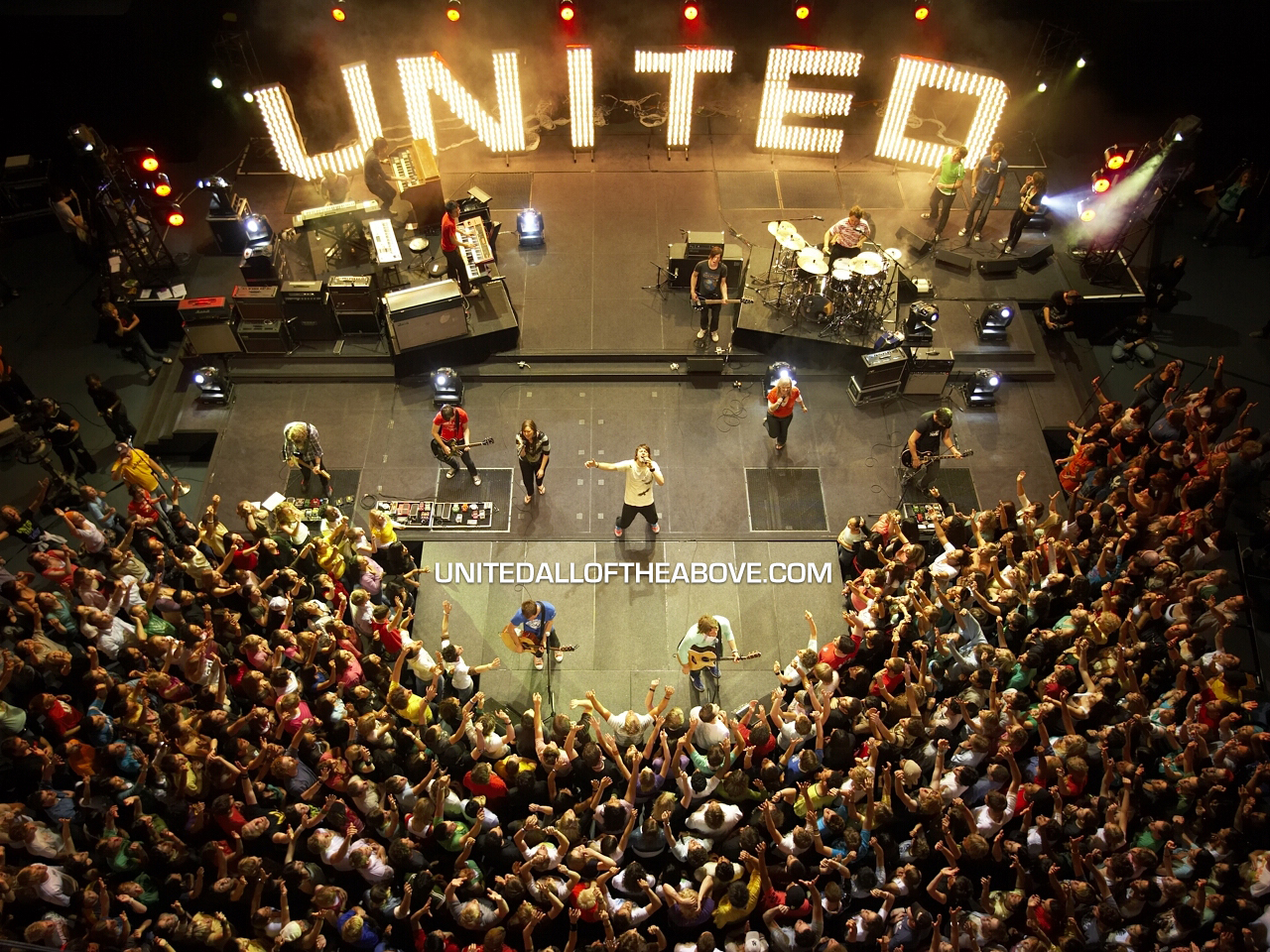
Religion is more often being thrown into the media spotlight, and not just in light of a new Pope or turmoil in the Middle East. It is the mediatization of religion and ritual that is being seen. Meyer talks about this in terms of the aesthetics that mediums provide to religious projection in Religious Sensation Media, Aesthetics, and the Study of Contemporary Religion (2012). Meyer (2012) distinguishes a new meaning for the word 'sensation' [that of feeling something] in a religious context. The new 'sensation' is about the creation of an excited feeling towards something, in this case religious rituals, and it is the media which help to permeate these 'sensations' (Meyer 2012,160). This can be seen in the form of not only religious news, but in the rituals that are now televised, like Hillsong on a Sunday morning. In this way the media and the denominations that use this media are appealing to a wider and younger audience through television. It is not only providing a platform for religions to expand their horizons but as Meyer put it, the sensational forms of religion "make it possible to sense the transcendental" (Meyer 2012, 160). 
Hillsong United Conference: http://wallpaper4god.com/wallpapers/hillsong-united-show_60_1280x960.jpg

Hjarvard, on the other hand, shows a different perspective on media and the religion by coining the term 'banal' religion. Traditionally, banal means lacking originality or boring (Banal 2013). He uses this banal from Billig's definition of 'banal nationalism' which describes the use of mundane items as national symbols. In the same way, Hjarvard pronounces that the banal elements of religion, like superstitions about death, can be much more enlightening because they allow the use of the imagination whereas traditional religious texts are the hard facts (Hjarvard 2006, 15). Some of these banal elements can also be considered in terms of 're-enchanting' post modern religion. Influenced by Weber, it is clear that new religious movements provide a way of 'finding' oneself in a meaningful way in an increasingly busy and lonely world. These new religious movements do this through the media. Hjarvard says that the media add a magical element to current religious states (Hjarvard 2006, 16).

Considering both of these perspectives, it is evident that the media play a crucial role in promoting and engaging with religion in the world today. The media don't care about the institutions they are writing about, but they do care about the people they are writing to. Hence, the media will increasingly be used to convey the 'religious imagination' of religions in order to appeal to the masses. 


References:

Meyer B. 2012. Religious Sensation Media, Aesthetics, and the Study of Contemporary Religion. In G. Lynch and J. Mitchell with A Strhan Religion, Media and Culture: A Reader. London and New York: Roultledge. (159-170). 

Banal. Retrieved March 15, 2013. http://dictionary.reference.com/browse/banal?s=t 

Hjarvard S. 2006. The Mediatization of Religion. Northern Lights Volume 6. Intellect Ltd.